Public padel apps changed the sport in Britain and Ireland. Players now book matches in minutes, meet strangers, and track progress through digital ratings. Yet many regular players now share the same complaint. The number beside a player’s name often says very little about the standard on court. That mismatch creates frustration, awkward games, and stalled improvement.
Padel growth across the UK has been rapid. Courts continue to open in places such as Manchester, Bristol, and Dublin. Apps like Playtomic helped fuel that rise. Players can join open matches without a regular group, and clubs can fill courts quickly.
The system works well at first. A beginner enters low-level games, improves, then climbs steadily. The problem starts once ratings become tied to ego. Some players protect their number. Others inflate it. Some barely understand how the system works at all.
Spend ten minutes reading Reddit padel forums and the same themes appear repeatedly. One player enters a level 2.5 match and faces former tennis players smashing overheads into the corners. Another joins a 4.0 game only to discover half the court struggles with basic positioning.
The result is simple. Many recreational players stop trusting the ratings.
Why Rating Inflation Happens
Rating inflation starts with human nature. Nobody enjoys seeing their number drop. Players want proof that they are improving, so many select easier matches to protect their score.
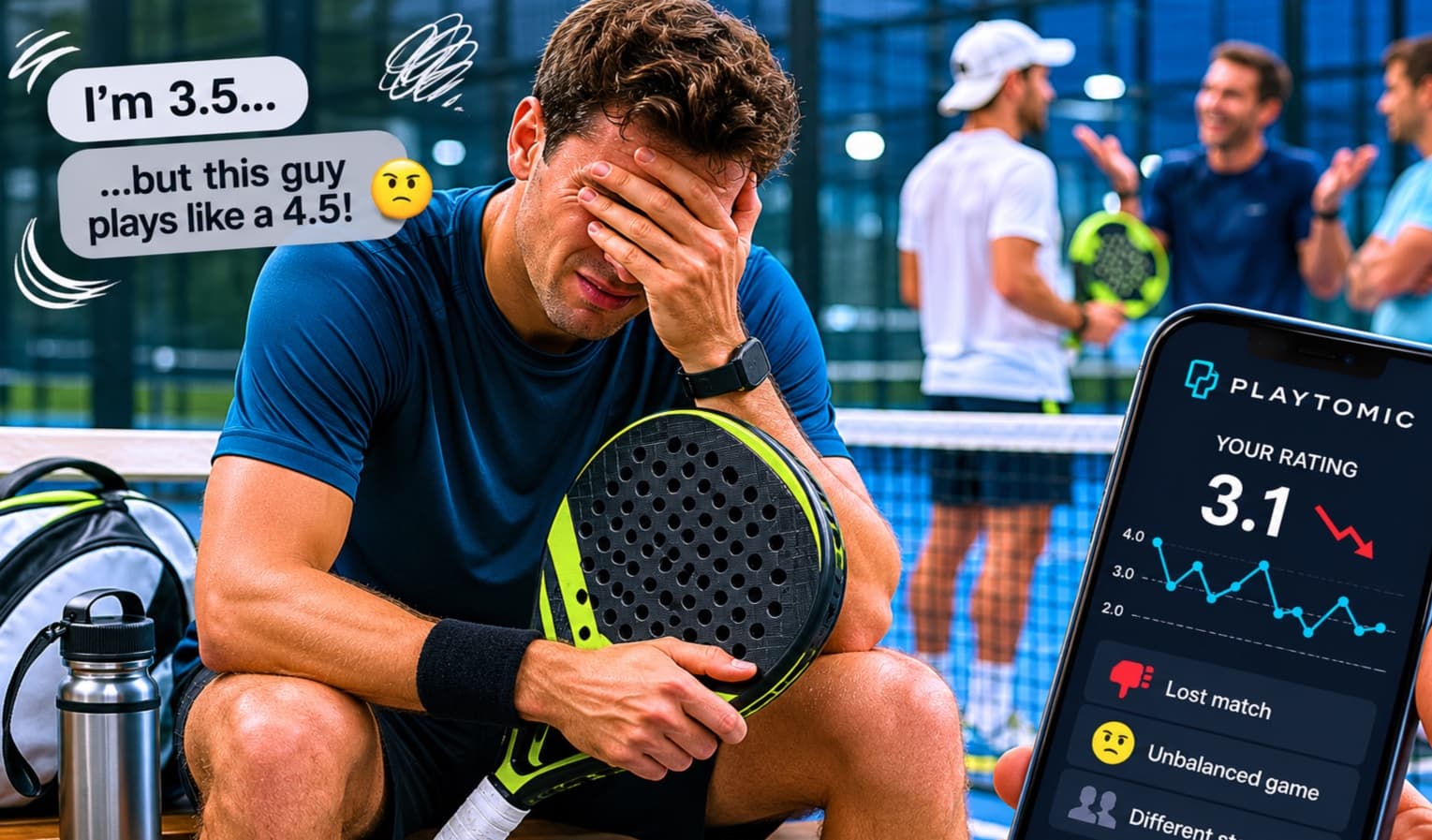
A common example appears in large cities such as London. A player rated 3.5 joins weaker public matches, wins comfortably, then sees their rating rise toward 4.0. Their technical level has not improved much, yet the app rewards victories rather than quality.
Another issue comes from tennis converts. Many experienced tennis players begin padel with low ratings. Their court movement, volleys, and reactions already exceed beginner standards. They dominate lower-level games for several weeks before the algorithm catches up.
Then there is inconsistency between clubs.
One club in Leeds might treat a 3.0 player as intermediate level. Another club in Glasgow may view 3.0 as close to advanced recreational standard. Players travel between venues and suddenly discover their rating means something completely different.
Indoor and outdoor conditions also matter. Fast indoor courts reward aggressive players. Slower outdoor courts expose poor positioning and weaker defence. A player who dominates one setting can struggle badly in another.
The number on the app cannot explain any of this.
The Worst Type of Mismatch
The most frustrating games are not the ones you lose heavily. Most recreational players accept defeat if the level feels fair.
The real problem comes from uneven pairings.
Imagine joining a mixed 3.0 match in Birmingham. One player belongs at 4.0 level. Another belongs at 2.0 level. The remaining two players sit somewhere in the middle.
No rally develops properly. One player controls every point. Another apologises after every error. Tension grows. Players stop attacking freely and begin protecting weaker areas of the court.
The match becomes a social exercise rather than competitive padel.
These games drain confidence. Newer players feel embarrassed. Stronger players become irritated. Nobody leaves satisfied.
Public matchmaking works best when all four players share a similar understanding of pace, positioning, and tactics. Even small gaps can ruin the balance.
Why Chasing a Rating Can Slow Improvement
Many players believe climbing from 2.5 to 3.0 or 3.5 proves genuine progress. Sometimes it does. Yet ratings can distract from the skills that actually matter.
A player obsessed with protecting their number often avoids difficult matches. They decline games against stronger opponents and target weaker pools instead.
This creates short-term comfort and long-term stagnation.
Padel improvement rarely feels comfortable. Better players expose weaknesses quickly. They target poor backhands, punish weak lobs, and force rushed decisions at the net.
Those painful matches teach far more than easy wins.
Many experienced coaches across the UK repeat the same advice. Play stronger opponents regularly. The scoreline matters less than the lessons.
A tough 6-2, 6-2 defeat against intelligent players often improves court awareness faster than ten easy victories.
The rating system cannot measure tactical growth either.
A player might learn to defend the glass properly, communicate better with partners, or choose smarter shot selection. These gains may not raise a digital number immediately, yet they improve real match quality.
How Good Players Actually Judge Level
Experienced padel players rarely focus on ratings alone. They look for patterns.
Consistency Under Pressure
Can the player defend deep lobs repeatedly? Can they reset points instead of forcing low-percentage winners?
Court Positioning
Strong recreational players understand movement. They move together as a pair and recover net position quickly.
Shot Selection
Lower-level players try spectacular winners too early. Better players construct points patiently.
Temperament
Some players collapse after two mistakes. Others stay calm and adapt. Mental stability matters hugely in amateur padel.
The app rating captures only fragments of this.
The Hidden Social Problem Inside Matchmaking Apps
Public apps changed the social side of padel. Players now enter games with complete strangers several times per week. That creates pressure.
Many players fear poor ratings from others after matches. Some become anxious about mistakes. Others avoid experimenting with new shots.
This fear damages improvement.
Padel rewards creativity and adaptation. A player learning bandejas or kick smashes will fail repeatedly before improving. Yet public rating culture can make experimentation feel risky.
Some players even avoid difficult weather conditions or stronger venues to protect their profile statistics.
The healthiest club environments usually care less about ratings and more about reliability, attitude, and compatibility.
Players remember the calm partner who communicates well. They remember the player who arrives on time and keeps matches enjoyable. Nobody talks endlessly about decimal points after a good social session.
How to Use Playtomic Properly
The app itself is not the enemy. Public matchmaking opened padel to thousands of players who otherwise lacked a regular group.
Problems start once players treat the rating as absolute truth.
Use the app as a guide rather than a judgement.
Play Across a Small Range
If your level sits around 3.0, enter some 2.5 games and some 3.5 games. You will gain confidence in one setting and learn faster in the other.
Read Player Reviews Carefully
Many regular players leave useful comments about competitiveness, attitude, and consistency.
Prioritise Clubs With Active Communities
Busy clubs in cities such as Edinburgh or Liverpool often develop more stable rating pools. Players know each other better, and levels become more accurate over time.
Track Your Own Development
Measure improvement through match awareness, stamina, shot tolerance, and confidence under pressure. Those markers matter far more than small rating movements.
The Strongest Players Usually Ignore Ratings
This surprises many newer players.
Advanced recreational players often care very little about digital rankings. They care about finding competitive games with good chemistry.
Some strong players keep modest ratings simply from inactivity. Others avoid public games almost entirely and organise private groups instead.
You will often find the best amateur matches through word of mouth rather than algorithms.
Regular groups build trust over time. Players learn each other’s habits and improve collectively. Match quality rises naturally.
That environment teaches padel properly.
How to Handle a Bad Match Without Ruining the Session
Every regular padel player eventually lands in a terrible mismatch. The key lies in handling it constructively.
If one player is clearly weaker, avoid targeting them relentlessly. Recreational matches should still feel welcoming.
If one player dominates unfairly, focus on defensive structure rather than chasing low-percentage winners.
Communication matters too. Calm encouragement changes the atmosphere quickly.
Players remember kindness during awkward matches. They also remember arrogance.
Many clubs across the UK now encourage mixed social rotations rather than strict rating separation. The social side keeps people returning long after the novelty of ratings fades.
The Future of Padel Ratings in Britain and Ireland
Rating systems will improve gradually. Better algorithms and larger player pools should create fairer matchmaking over time.
Yet no app can fully measure tactical awareness, chemistry, confidence, or decision-making under pressure.
Padel remains deeply human.
The best sessions still come from balanced games, enjoyable partners, and long rallies that leave all four players smiling at the end.
The number beside your profile helps organise matches. It does not define your ability, your progress, or your value on court.
Many players improve faster once they stop staring at ratings after every session.
They start focusing on movement, patience, positioning, and smart shot selection instead.
That shift usually leads to better padel and far more enjoyable evenings at the club.