British homeowners are ripping up lawns and installing private padel courts in back gardens, then renting them out by the hour. What started as a lockdown vanity project has become a genuine side hustle. Some hosts are pulling in £30,000 a year. Others are locked in planning disputes with furious neighbours. The question is whether your suburb will allow it.
Sarah Mitchell installed a court behind her Berkshire home in 2022. She paid £28,000 for the full setup: artificial turf, toughened glass walls, LED floodlights. Her plan was simple. Play padel with friends on weekends. Rent it out midweek to cover the cost.
Within three months, she had 40 regular bookings per week. She charges £40 per hour and runs sessions from 7am to 9pm. Her annual revenue hit £32,000 last year. After maintenance and electricity, she cleared £24,000 in profit.
"I thought I'd get a few bookings from the tennis club down the road," she says. "Instead, I've got corporate groups, hen parties, and families who drive 20 miles to play here."
Mitchell is part of a small but growing cohort of homeowners monetising Britain's padel boom. The sport has exploded from 30 courts nationwide in 2019 to more than 350 today. Commercial venues charge between £30 and £60 per hour. Private courts undercut them by 20 per cent and offer something commercial clubs cannot: exclusivity.
The Economics of a Garden Court
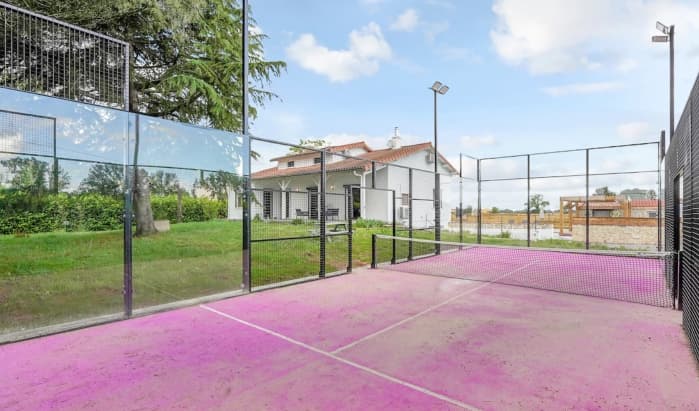
A regulation padel court measures 20 metres by 10 metres. That includes the playing surface and a small buffer zone. You need at least 250 square metres of usable garden space. Most suburban plots will not accommodate one.
Installation costs range from £22,000 to £35,000. Budget options use modular glass panels and basic turf. Premium builds feature panoramic glass, branded surfaces, and integrated sound systems. Floodlighting adds another £2,000 to £4,000.
Tom Bradley, who runs a padel court installation business in Manchester, says demand tripled in the past 18 months. Half his clients plan to rent the courts commercially. The other half want private facilities and accept they will never recoup the investment.
"The people who make money are the ones who live near cities and treat it like a proper business," Bradley says. "You need insurance, liability cover, and an online booking system. It's not just a case of throwing up some glass and hoping people turn up."
Insurance is the hidden cost. Public liability cover for a residential court rented to strangers costs between £800 and £1,500 per year. Some insurers refuse to cover residential padel courts entirely. Others impose strict conditions: CCTV, first aid kits, regular safety inspections.
Planning Permission: The Legal Minefield
Most homeowners assume a garden court falls under permitted development. It does not. A padel court is a substantial structure. It requires planning permission in almost every council area.
Councils assess applications based on noise, light pollution, and impact on neighbouring properties. Floodlit courts that operate until 9pm face the most resistance. Residents complain about the constant thwack of the ball and the glare from LED lights.
James O'Connor submitted a planning application for a court in his Cheshire garden in 2023. The council rejected it. His neighbours had filed 12 objections. They cited noise, loss of privacy, and increased traffic from visiting players.
O'Connor appealed. He hired an acoustic consultant who measured decibel levels from nearby tennis courts. He installed a 3-metre fence to block light spill. He limited operating hours to 8am to 7pm on weekdays. The appeal succeeded, but the process took 14 months and cost £9,000 in fees.
"If I'd known the hassle, I would have built a swimming pool instead," he says. "But now it's up and running, I'm booked solid. I've got people asking if I'll install a second court."
The Neighbour Problem
Padel is louder than tennis. The ball is pressurised rubber. It hits glass walls at high speed. The sound carries. A 2023 study by the University of Leeds measured noise levels at 75 decibels during peak play. That is comparable to a vacuum cleaner running in the next room.
Laura Green installed a court in her Surrey garden in 2022. Within two weeks, her neighbour filed a noise complaint with the council. The environmental health officer visited three times. Green was told to stop bookings after 6pm and install acoustic panelling around the court perimeter.
The panelling cost £6,500. It reduced noise by 15 decibels. The neighbour was still unhappy. Green now offers free court time to nearby residents once a week. The complaints stopped.
"You have to manage the politics," she says. "If your neighbours hate you, they will make your life miserable. I've seen people forced to dismantle courts after six months because they ignored the complaints."
Who Is Renting Private Courts?
Corporate groups are the most lucrative customers. They book two-hour sessions for team-building events and pay upfront. Mitchell charges £90 per hour for corporate bookings. She provides rackets, balls, and a basic coaching session.
Social players book evening slots. They are repeat customers who play weekly. They pay £35 to £40 per hour and bring their own equipment. Families book weekend mornings. They want a private space where children can learn without the pressure of a public club.
Birthday parties are a growing niche. Parents pay £150 for a two-hour hire that includes coaching, equipment, and use of the garden for food afterwards. Mitchell runs three parties per month. They account for 15 per cent of her revenue.
The strangest booking she has taken was a wedding proposal. A man rented the court for an hour, covered it in roses, and proposed to his girlfriend mid-game. She said yes. He paid double the hourly rate.
The Maintenance Reality
A padel court is not a set-and-forget investment. The turf needs brushing weekly to prevent compaction. Glass panels require cleaning every two weeks to remove dirt and ball marks. Floodlights burn out and need replacing every 18 months.
Mitchell spends four hours per week on maintenance. She employs a part-time cleaner who visits twice weekly. The cleaner costs £80 per month. She replaces balls every six weeks. A set of competition-grade balls costs £12.
The biggest expense is resurfacing. Artificial turf lasts five to seven years with heavy use. Replacement costs between £8,000 and £12,000. That wipes out two years of profit.
"People see the revenue and think it's easy money," Mitchell says. "They forget about the wear and tear. If you're not prepared to reinvest, the court will look tatty within two years. Then bookings dry up."
Is This the Future of Padel in the UK?
Private courts will never replace commercial clubs. They cannot offer leagues, coaching programs, or the social atmosphere of a full-service venue. But they fill a gap. They provide affordable access in areas where commercial clubs do not exist.
Bradley predicts 200 new residential courts will be installed in the next two years. Most will be in the Home Counties, where property prices support the investment. Rural areas will struggle. The customer base is too small to justify the cost.
Mitchell has no regrets. Her court pays for itself. She plays twice a week for free. Her children have learned the sport without joining an expensive club. She has turned a dead lawn into a revenue stream.
"Would I recommend it? Only if you have deep pockets and patient neighbours," she says. "But if you can make it work, it's the best use of garden space I've ever seen."