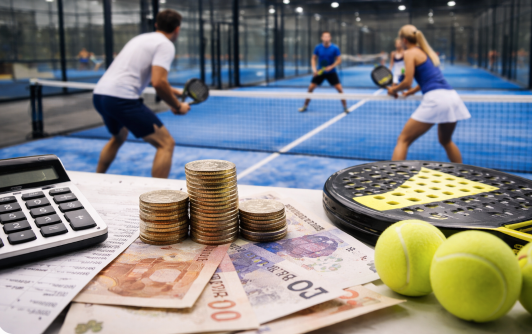
Padel has spread across the UK at pace over recent years, drawing players from tennis, squash, and five-a-side football. Courts now exist all over the UK and Ireland, yet a key question remains. Can the sport grow if the cost to play stays high? This article looks at court fees, equipment prices, and access costs.
The rise of padel in the UK has been swift. The Lawn Tennis Association reported over 350 courts in operation by early 2026, with plans for more than 1,000 by 2028. Private investment drives most of this growth, and that shapes pricing from the outset.
New clubs often sit on premium land, with indoor facilities that run all year. These sites cost millions to build. A single covered court can exceed £260,000 once groundwork, lighting, and enclosure costs are included. Clubs pass those costs to players through hourly fees.
What Does It Cost to Play Padel in the UK?
In London, a peak-time court costs on average £63 to £84 per hour. That fee splits between four players, so each person pays around £16 to £21. Off-peak rates drop to £32 to £42, yet many players struggle to book those slots.
In Manchester, Leeds and other locations around the UK prices tend to sit lower. Expect £42 to £63 at peak times on average. Smaller cities such as Nottingham or Reading often charge between £26 and £47. These figures still place padel above many local sports in cost per hour.
Coaching adds another layer. A one-hour group session ranges from £11 to £26 per person. Private lessons often exceed £53 per hour. For new players, lessons help build skills fast, yet they raise the entry cost.
Membership models vary. Some clubs charge a monthly fee of £21 to £53. Others run pay-as-you-play systems. Members often gain priority booking, which pushes casual players toward higher prices or limited slots.
Equipment Costs: A Barrier for Beginners
A padel racket costs between £53 and £263 on average. Entry models sit near the lower end, yet many players upgrade within months. Balls cost around £5.25 to £7.35 per tube, and they lose pressure after a few matches.
Shoes matter. Padel courts use artificial turf with sand. Standard trainers wear out fast and offer poor grip. Proper shoes cost £63 to £126. Clothing remains similar to tennis or gym wear, though many players buy sport-specific items.
Clubs often rent rackets for £2.10 to £5.25 per session. That helps first-time players, yet regular use makes ownership more practical. Over a year, equipment costs can reach £210 to £420 for an active player.
Is this high compared to other sports? Football requires little more than boots and a ball. Running costs even less. Tennis can match padel in price, yet many public courts remain free or low cost. Padel rarely offers that option.
Why Are Prices So High?
Padel courts take up less space than tennis courts, yet they need walls, glass panels, and specialist surfaces. Indoor venues need high ceilings and strong lighting. Energy costs remain high, especially during winter.
Land prices in cities such as London and Birmingham push costs further. Clubs aim to recover investment within a set period. That leads to premium pricing in the early years of operation.
Demand plays a role. Many clubs report full bookings during evenings and weekends. High demand allows operators to maintain prices. As more courts open, competition may push prices down, though this has yet to happen at scale.
Weather matters too. Outdoor courts face rain and wind. Indoor courts offer certainty, which raises their value. Players often pay more for guaranteed play time.
Who Gets Left Out?
Cost shapes who plays padel in the UK. Many early adopters come from tennis clubs or private fitness centres. These groups already accept higher sports costs.
Younger players face limits. A teenager who wants to play twice a week may spend £32 to £42. Over a month, that reaches £130 or more. This sits beyond the reach of many families.
Community access remains low. Few public facilities offer padel at reduced rates. Football pitches and basketball courts appear in most towns. Padel courts rarely do.
Does this slow growth? Yes, it does. A sport grows faster when schools and local councils support it. Without that base, growth relies on private clubs and adult players with spare income.
How Does the UK Compare with Europe?
Spain leads the padel world, with over 20,000 courts. Prices there often fall between €5.25 and €10.50 per player. Public facilities play a large role, and many towns offer courts at low cost.
Sweden saw rapid growth between 2018 and 2022. Prices rose quickly, then fell as supply caught up with demand. Some clubs closed after expansion moved too fast.
The UK sits at an earlier stage. Supply remains limited, and demand stays strong. This keeps prices high. If court numbers increase as planned, the market may follow Sweden’s path, with more competitive pricing.
The Role of the LTA and Local Councils
The Lawn Tennis Association supports padel through funding and planning. It aims to place courts in parks and leisure centres. These sites can offer lower prices and wider access.
Local councils hold the key. Land availability and funding decisions shape where courts appear. Some councils in cities such as Sheffield and Liverpool have begun pilot projects. Early results show strong demand.
Public courts often charge £6.30 to £10.50 per player. This level opens the sport to a wider group. Expansion of these facilities will play a major role in long-term growth.
Can Prices Fall in the Near Future?
Prices can fall if supply increases. More courts mean more booking options. Clubs may compete on price or offer off-peak deals.
Technology may help. Modular court designs reduce build costs. Faster installation lowers upfront spending, which can lead to lower fees.
Partnerships with gyms and leisure centres can spread costs. Shared facilities reduce the need for standalone sites. This model already appears in parts of London and Bristol.
Corporate leagues and sponsorship can offset costs. Clubs that secure steady group bookings can lower prices for casual players.
Is Padel Still Worth the Cost?
Padel offers strong value for many players. Matches last 60 to 90 minutes, and four players share the cost. The social aspect stands out. Games feel relaxed, and rallies last longer than in tennis.
Fitness benefits remain clear. Players cover short distances with frequent changes of direction. This improves balance and coordination. Sessions burn around 400 to 600 calories per hour.
For many, the experience justifies the price. Yet value depends on access. If players cannot book courts or afford regular play, the sport loses appeal.
What Needs to Change for Wider Growth?
Lower entry costs will drive participation. Public courts and school programmes can build a broader base. Equipment schemes, such as free racket hire for juniors, can help.
Clubs can offer flexible pricing. Shorter sessions, off-peak discounts, and group packages can attract new players. Clear pricing builds trust and encourages repeat visits.
National support matters. Investment in grassroots programmes will shape the next phase of growth. Without it, padel risks staying a niche sport in the UK.
The question remains clear. Is padel too expensive? At present, many players would say yes. The sport shows strong appeal, yet cost limits who can join. If prices fall and access improves, padel can move from a fast-growing trend to a lasting part of UK sport.