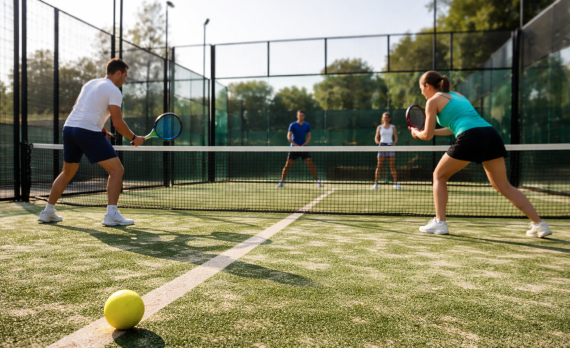
Padel courts look similar at a glance, yet the surface underfoot shapes every rally. Speed, bounce, grip, and strain on joints all change with material choice. Recreational players and league regulars often switch courts without thinking about fit. This guide explains nine common padel surfaces and matches each one to playing style.
1. Artificial Grass with Sand Infill
This is the most common padel surface across the UK and Ireland. Short synthetic fibres hold a fine layer of sand. The ball skids after the bounce and slows slightly. Players gain reliable grip and controlled slides. Rallies last longer than on hard courts.
Club players favour this surface. It suits baseline builders who value consistency. Many centres in Manchester and Dublin use it for league play. Knees and ankles feel less impact than on concrete.
2. Artificial Grass without Sand
This version removes loose sand and relies on textured fibres for grip. The ball travels faster and jumps higher. Footing feels cleaner and less abrasive. Shoes stay free of grit.
Attack minded players enjoy the pace. Volleys bite and overheads finish points quickly. Some UK clubs choose this option for premium courts. It demands sharp movement and quick reactions.
3. Textured Concrete
Textured concrete offers a firm, even base with a rough finish. The ball rebounds high and true. Movement feels direct with no slide. Players stop and start abruptly.
This surface suits fast exchanges and flat hitters. It appears in outdoor public courts and early padel installs. Joints take more load, so warm up matters.
4. Porous Concrete
Porous concrete allows water to drain through the surface. Play resumes soon after rain. Bounce stays consistent and grip remains steady.
Outdoor venues in wetter parts of the UK favour this option. Players who train year round value its reliability. Footwork feels similar to standard concrete.
5. Acrylic Coated Concrete
Acrylic layers sit on top of a concrete base. Colour, texture, and speed change with coating depth. The ball moves quickly and rebounds cleanly.
Tennis converts feel at home here. Flat strokes and early contact work well. Some indoor centres use acrylic for coaching courts.
6. Polyurethane Surface
Polyurethane creates a cushioned, seamless finish. It absorbs shock and returns energy softly. Bounce stays even across the court.
Players with joint concerns prefer this surface. Longer sessions feel easier on the body. It suits mixed ability groups and social leagues.
7. Rubberised Surface
Rubber based courts add extra give underfoot. Grip remains high, even in damp air. The ball slows after contact.
Defensive players gain time to reset. Extended rallies feel comfortable. Some training facilities use rubberised courts for junior coaching.
8. Hybrid Grass and Resin
Hybrid systems blend short turf with a resin layer beneath. The result balances speed and control. Bounce stays predictable and footwork feels secure.
All court players benefit most. Lobs, volleys, and groundstrokes all behave well. New padel builds in the south of England often choose this format.
9. Modular Interlocking Tiles
Interlocking tiles clip together over a base. Installation is quick and repairs are simple. Ball speed sits between grass and hard courts.
Pop up events and temporary courts rely on this system. Players experience firm footing with mild shock absorption. It works best for short term use.
How to Choose the Right Surface
Start with your style. Baseline builders gain control from sand filled grass. Net rushers enjoy faster grass or acrylic. Players with knee or hip concerns feel relief on cushioned systems. Outdoor regulars need drainage and weather resistance.
Try different courts in your area and note how rallies unfold. Surface choice shapes confidence and comfort. The right match turns good padel into great padel.