Padel is growing at a rate that few leisure categories can match. UK court numbers climbed from fewer than 40 in 2016 to 710 by the mid-2020s, a compound annual growth rate of 43%, according to research by Oxygen Consulting. Court occupancy is averaging above 85%. Venues run late into the evening, sometimes until 1am, right across the week.
That last detail matters. Padel does not rely on weekends to fill courts. It performs consistently from Monday to Friday, which tells operators something important: this is not a passing trend. Players are booking courts the way they book gym classes or restaurant tables. It has become a repeatable social habit.
The sport sits neatly between fitness and competitive socialising. It appeals to people who want to feel active without the steep learning curve or the barriers that come with traditional racket sports. You do not need years of training to enjoy a game with colleagues or friends. That accessibility, combined with the enclosed court format and the social energy it generates, has driven participation sharply upward across cities like Manchester, Bristol, and Edinburgh.
A More Segmented Market
As the sector grows, the operator picture is becoming more complex. The top ten operators now control 37% of UK padel courts, and the push for scale is picking up pace. David Lloyd Leisure is currently the largest single operator, with 66 courts across 26 clubs and a clear stated ambition to grow its footprint further.
Other brands are pursuing their own expansion plans with equal energy. Game4Padel is building its outdoor model through partnerships. The Padel Club is targeting major regional cities. Rocket Padel is progressing premium locations across London. Padel4all and PDL Padel United are focused on regional expansion, concentrating on areas where supply is still limited and demand is building without enough courts to meet it.
The arrival of Slazenger Padel Clubs, backed by Frasers Group, is another strong signal of where the market is heading. When established consumer brands with real operational scale commit to multiple venues, the market tends to move faster. The debate shifts away from whether the sport has a future and towards which operators will hold their ground as competition increases and consumer choice widens.
That shift also points towards consolidation ahead. Mergers and acquisitions are a natural next step when a leisure sector moves from early growth into a more mature phase. Operators that build strong brands, loyal memberships, and efficient rollout models now will be far better placed when that wave arrives.
Supply Is Still Catching Up
Fast growth does not automatically produce balanced growth. Oxygen Consulting's research found that nearly half of all padel players reported difficulty booking court time. Supply is still lagging behind demand across a significant number of locations.
The geographic spread of courts makes this more acute. Some 72% of UK padel courts sit in southern England. Access across Wales, Northern Ireland, and large parts of the Midlands remains limited. Players in those areas face longer journeys and fewer choices, and that is a problem the sport needs to address if it wants to become a truly national activity.
This imbalance creates a real opening for operators with strong rollout models and the financial backing to act on them. But it also raises harder questions about how the next phase of expansion is delivered. In areas where affordability matters more and discretionary income is lower, price points and facility access will shape how many people can realistically participate over the long term. An operator that builds only premium venues in London and the South East will not build a national sport.
The Practical Challenges of Scaling Quickly
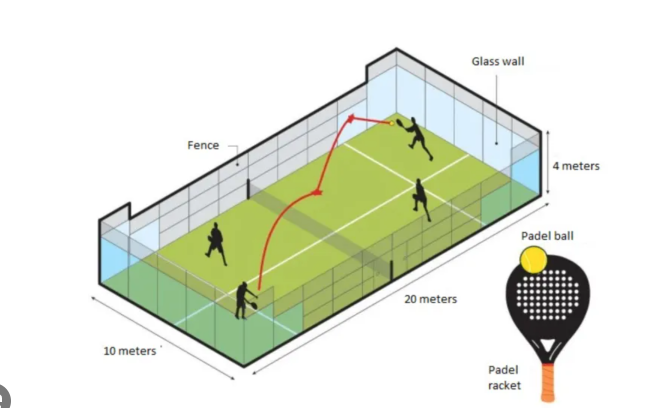
Padel also comes with a specific set of operational challenges that any expanding operator has to plan around carefully. Courts require buildings with suitable ceiling height, enough floor spacing, and the right layout. Planning constraints around noise and light pollution can slow or block new developments, particularly in residential areas near cities like Leeds, Cardiff, and Southampton.
Fit-out costs for high-quality facilities have been rising, and that has implications for margin. A well-built indoor padel venue is not a cheap project. Operators who cut corners on court quality or player experience tend to find out quickly that padel players notice and talk.
Weather is also a factor shaping investment decisions in a direct way. With 55% of UK courts currently uncovered, operators and investors are watching the growing shift towards indoor and covered developments. An outdoor court in northern England is a different proposition from one in Seville. The UK climate makes covered facilities a stronger long-term bet for most locations, and that requires more capital upfront.
Differentiation Will Define the Next Stage
The short to medium term outlook for padel remains strong. The participation numbers, the booking rates, and the continued appetite from investors and established leisure brands all point in the same direction. But the market is entering a more selective phase, and operators that relied on early-mover advantage will need to build something more durable.
This year is likely to be the point where differentiation becomes a real competitive factor. Some operators will compete on scale, coverage, and partnerships. Others will compete on court quality, the depth of their wider offer, and the strength of their community. Food and drink, gym facilities, and wellness spaces are increasingly appearing alongside padel courts, and that is not accidental. Operators know that a player who stays for a meal or a training session after their game is worth considerably more over time than one who books, plays, and leaves.
The venues that get this right tend to share a few qualities. They are consistent. They are well run. The booking process is smooth, the courts are maintained properly, and the staff know the sport. Whether you are walking into a padel club in Birmingham, Belfast, or Brighton, that consistency of experience is what builds the kind of loyalty that sustains a business through a more competitive market.
Which Operators Will Win?
The question the industry is now asking is not how fast padel can grow. That question has been answered. The courts are full, the bookings are strong, and the investment is flowing. The real question is which operators can build something that lasts.
Leisure categories that grow this quickly tend to produce winners and losers in waves. The first wave rewards early movers who secure sites and build brand awareness. The second rewards operators who can run facilities well, retain customers, and expand without losing quality. The third wave, which comes with consolidation, rewards those with the strongest fundamentals: brand, loyalty, cost control, and the ability to absorb or outlast weaker competitors.
Padel is moving through those waves faster than most sports have managed. Operators who treat this moment as a chance to build proper, resilient businesses, rather than simply putting up courts and hoping for occupancy, will be the ones still standing and growing when the market settles.
The sport deserves that level of ambition from the people running it. The players are already there.
What the Numbers Actually Tell Us
It is worth stepping back and looking at what the headline figures actually mean for someone who plays the sport, runs a venue, or is thinking about entering the market.
A 43% compound annual growth rate in court numbers over nearly a decade is extraordinary. Most leisure categories would welcome a fraction of that. The 85% occupancy average is even more striking, sitting well above what most sports facility operators consider a healthy baseline. These are not the numbers of a niche sport finding its audience. They are the numbers of a mainstream leisure category in the middle of its fastest growth period.
The 47% of players who reported difficulty booking a court are not a footnote. They are a signal that demand is running well ahead of supply in many areas. That gap represents both a commercial opening and a risk. If players cannot get court time regularly, they find other ways to spend their evenings. Retaining those players means making booking easier, not just building more courts.
The 72% concentration of courts in southern England creates its own dynamic. In areas with strong supply, competition will intensify and operators will need to work harder to stand out. In areas with limited supply, the first credible operator to arrive with a well-run facility will capture a loyal base quickly. The map of UK padel is still being drawn, and large areas remain where the first-mover advantage is still available to claim.
The Indoor Question
The shift towards indoor and covered facilities is not just a weather story. It reflects a broader maturation of the market. Early padel growth in the UK came largely through outdoor courts, often attached to existing sports facilities or laid on open land. That model worked well for getting courts built quickly and at lower cost, but it has limits.
An outdoor court in February in the north of England offers a different experience from one in May. Courts that sit empty through the winter months do not help an operator reach the occupancy levels needed to run a profitable venue. Covered facilities cost more to build, but they perform more consistently across the year, attract more committed players, and are easier to programme with coaching, leagues, and corporate events.
The 55% of courts that are currently uncovered represent a decision point for many operators. They will be weighing the cost of covering or replacing those facilities against the revenue they are leaving on the table during poor weather. The economics will tip towards investment for many of them, particularly as competition increases and a well-lit, climate-controlled alternative just down the road starts to draw players away.
The Social Layer That Makes Padel Sticky
One thing the data cannot fully capture is why padel retains players so well once they start. The sport is genuinely enjoyable at beginner level in a way that tennis, for example, takes months to reach. Two people who have never picked up a padel racket can have a fun, engaging game within their first session. Add two more players for doubles, the standard format, and the social energy of the game becomes immediately clear.
Padel courts are enclosed. You can see and hear the other pair clearly. Rallies tend to last longer than in tennis because the walls keep the ball in play. Longer points mean more activity, more conversation between rallies, and more of the shared experience that makes people want to book the same slot next week.
That social stickiness is something operators are beginning to understand and build around. Clubs running regular social sessions, beginner nights, and mixed-ability leagues are seeing better retention than those that simply rent court time and leave players to organise themselves. The sport generates its own community, but venues that actively support that community build something more durable than a booking platform with courts attached.
The Road Ahead
Padel's trajectory over the next three to five years will be shaped by forces that are already in motion. The pace of new court development will slow somewhat as planning, costs, and the availability of suitable sites create natural friction. The concentration of supply in the south will ease as operators pursue the remaining opportunities in the north, the Midlands, and across Scotland and Wales.
Competitive intensity among operators will increase before it decreases. More venues, more brands, and more marketing spend competing for the same players in well-supplied markets will put pressure on margins and force operators to be sharper about who they are targeting and what they are offering. Some will not make it through that period. Others will come out stronger.
Consolidation will come. It always does in sectors that grow this way. The question for existing operators is not whether to prepare for it but how. Strong brands, efficient operations, loyal memberships, and consistent financial performance are the qualities that attract acquirers and give independent operators the leverage to stay independent if they choose to.
For players, the outlook is genuinely positive. More courts, more choice, better facilities, and a sport that the broader leisure industry has now taken seriously enough to invest in properly. The gap between what the best padel venues offer today and what the average venue offered five years ago is already significant, and that gap will keep widening as competition forces standards up.
Padel arrived in the UK relatively late compared to Spain, Argentina, and Sweden. It has made up for that lost time at a pace that surprised almost everyone watching the market. The next phase will be more complex and more contested. But the foundation built over the past decade gives the sport every reason to keep growing. The courts are full. The players are committed. The investment is there. What happens next depends on who builds it best.