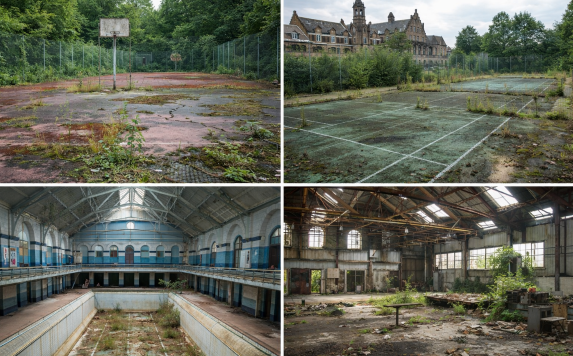
Britain's hinterlands are filled with empty spaces waiting for a second life. Former factories sit silent. Railway arches gather dust. Car parks lose customers to remote work. These forgotten corners could host the country's fastest-growing sport. Padel needs just 200 square metres and a 10-metre ceiling. That means countless abandoned sites across the UK are ready-made courts.
1. Disused Railway Arches in Manchester
Victorian engineers built thousands of brick arches beneath Manchester's railway lines. Many now sit empty. The dimensions are nearly perfect. Most arches span 6 to 8 metres wide and stretch 20 metres deep. A padel court needs 10 metres by 20 metres. The brick walls provide natural sound insulation. The arch overhead protects from rain.
Network Rail estimates that 30 per cent of Manchester's railway arches are vacant. The city centre alone has over 200 arches. Converting just 10 per cent would create 20 new courts. The Northern Quarter and Castlefield already use arches for bars and studios. Padel clubs would fit the same model.
The existing structure cuts construction costs. You need flooring, glass walls, and lighting. The rest is already there. Developers have paid £50,000 to £80,000 per arch for basic fit-outs. A padel court would cost similar amounts. Compare that to £150,000 for a standalone outdoor facility.
2. Former Department Store Rooftops in City Centres
Debenhams closed 124 UK stores between 2019 and 2021. House of Fraser shut 31 locations. These buildings left behind flat rooftops of 2,000 to 5,000 square metres. Most support existing air conditioning units weighing several tonnes. They can handle padel courts.
Rooftop venues solve land scarcity in cities like Birmingham, Leeds, and Bristol. A single department store roof could fit four to six courts. Players would get views of the city skyline. The height means no planning objections from neighbours about noise or overlooking.
Leeds city centre tested this concept in 2023. A developer converted the top floor of a former BHS into a sports facility. Planning permission took six months. The building already had lift access and changing rooms. The padel courts opened in March 2024. They run at 85 per cent capacity.
3. Empty Multi-Storey Car Park Levels
British car parks lost 40 per cent of usage during the pandemic. Many never recovered. NCP operates 400 car parks across the UK. A third report declining revenue. The concrete floors are load-bearing. The ceiling height averages 2.4 metres per level. You need 6 metres minimum for padel. That means using two floors or selecting the ground level.
Ground-floor conversions work best. The concrete slab is already there. You add glass walls and artificial turf. The structure provides weather protection. Existing lighting reduces costs. Car parks have changing facilities and reception areas.
Nottingham's Trinity Square car park converted two levels in 2022. The facility now has three padel courts. Monthly memberships cost £60. The location is 200 metres from the train station. Office workers book lunch-hour sessions. The car park still operates on upper floors.
4. Abandoned Lidos and Outdoor Swimming Pools
Britain built hundreds of outdoor pools between 1920 and 1960. Most closed by the 1980s. The Historic England register lists 87 derelict lidos. These sites have drainage systems. The pool base provides a level foundation. The surrounding infrastructure includes changing rooms and cafes.
A standard lido measures 25 metres by 10 metres. That fits one padel court with room for spectator seating. Larger pools could accommodate multiple courts. The challenge is filling the pool and reinforcing the base. Contractors quote £30,000 to £50,000 for this work.
Bristol's Henleaze Swimming Club kept its lido open. They added two padel courts beside the pool in 2023. The combination works. Families swim in summer. Padel runs year-round. The club gained 200 new members. Revenue increased by 45 per cent.
5. Former Woolworths Units on High Streets
Woolworths collapsed in 2008. The chain had 807 stores. Many buildings remain empty 16 years later. These units average 1,000 square metres of floor space. Ceiling heights reach 4 to 5 metres. That fits two indoor padel courts side by side.
High street locations offer foot traffic. Players see courts through glass walls. The visibility markets the sport. Poundland and B&M took some former Woolworths stores. Padel clubs could take others.
Planning permission is simpler for sports use than for housing or restaurants. Local councils support schemes that bring activity to dying high streets. Rents are low. Landlords accept tenants who maintain the building. A Woolworths conversion in Swindon opened in 2024. The club has 400 members.
6. Redundant Petrol Stations
Shell closed 500 UK forecourts between 2019 and 2023. BP shut 300. The shift to electric vehicles will close more. These sites cover 400 to 800 square metres. The concrete forecourt is already poured. The canopy provides weather protection.
Corner locations give good visibility. Existing access roads mean no new traffic planning. The shop building converts to a reception area. Petrol stations have parking spaces for 10 to 20 cars. Padel players need somewhere to park.
Environmental cleanup is the main cost. Fuel tanks must be removed. Soil testing is required. This adds £20,000 to £40,000 to the project. A former Shell station in Reading became a padel club in 2023. The developer bought the site for £180,000. The club has two courts and 250 members.
7. Closed Industrial Warehouse Units
Manufacturing declined across the Midlands and North. Factories sit empty in Birmingham, Manchester, and Newcastle. Warehouse units of 2,000 to 10,000 square metres gather dust. These buildings have high ceilings. Many reach 8 to 12 metres. A padel court needs 6 metres minimum.
Industrial zones have parking. Noise complaints are rare. Planning permission is straightforward. The structures are built to carry heavy machinery. Padel courts weigh much less. You need flooring, walls, and lighting. The building provides everything else.
A former textile factory in Oldham converted to a sports hub in 2022. The facility has six padel courts, a gym, and a cafe. The 3,000-square-metre building cost £280,000 to buy. Fit-out costs reached £350,000. The club broke even within 18 months.
8. Empty Nightclub Buildings
Nightclubs have struggled since 2020. Over 200 closed between 2020 and 2023. Cities like Newcastle, Leeds, and Birmingham have multiple vacant venues. These buildings have specific features padel clubs need. Ceiling heights average 6 to 8 metres. Sound systems and lighting are already installed. Changing rooms and toilets exist.
Nightclub spaces average 500 to 1,500 square metres. That accommodates two to four padel courts. The venues have late licenses. Padel clubs could operate until 11pm. The bar area converts to a cafe or restaurant. Players book evening sessions after work.
A former nightclub in Sheffield became a padel centre in 2023. The 800-square-metre space has three courts. The club kept the bar. Players drink after matches. The venue runs leagues on weekday evenings. Weekend sessions start at 9am.
9. Disused Church Halls and Community Centres
Church attendance fell 50 per cent between 2000 and 2020. Parish halls sit empty during the week. Community centres lose funding. These buildings were designed for gatherings. Hall dimensions often reach 15 metres by 20 metres. Ceiling heights average 5 to 7 metres.
Churches want income. Padel clubs provide steady rent. The buildings stay in community use. You need planning permission to change from community to sports use. Councils approve this if the building serves local residents.
A church hall in Cambridge converted part of its space to a single padel court in 2023. The church kept the kitchen and meeting rooms. The court operates Tuesday to Sunday. The church uses it for youth programs on Monday. The arrangement brings in £15,000 per year. The building stays open.