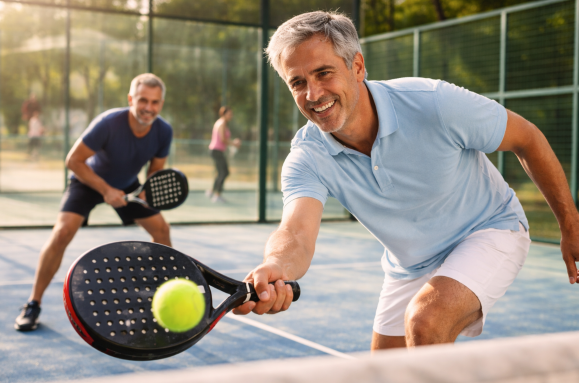
Padel attracts many players in their forties, fifties, and beyond, and the reasons stay practical. The sport values control over force, rewards teamwork, and places less strain on joints. Games feel competitive without feeling punishing. Sessions fit busy lives, build fitness steadily, and keep the social side strong long after the final point.
It protects joints without feeling gentle
Padel places far less stress on knees, hips, and shoulders than many racket sports. The court measures twenty metres by ten, so players cover ground without constant sprinting. Rallies rely on placement and anticipation. The walls return the ball at playable speeds, which reduces sudden stops and lunges.
Many players notice fewer flare-ups after matches compared with tennis or squash. Movements stay compact. Shots come from controlled swings. A standard padel racket weighs around 370 grams and has no strings, which softens impact on the arm. The game still feels lively, but the body recovers faster the next day.
It rewards thinking over raw power
Padel suits players who read play well. Points often hinge on patience rather than pace. A well-timed lob beats a heavy smash. Angles matter more than speed. Players learn to wait for openings and force errors through placement.
Experience counts here. Years spent in other sports help with positioning and shot choice. Reaction time stays useful, but smart decisions carry equal weight. This balance allows players over forty to compete comfortably with younger opponents and still enjoy tight matches.
It builds fitness without long recovery
Padel sessions raise the heart rate steadily. Most club matches last ninety minutes, including warm-up and short breaks. The stop-start nature of points gives built-in recovery time. Players move often but rarely hit full exhaustion.
Regular play improves aerobic fitness, balance, and coordination. Calorie burn averages between four hundred and six hundred per session, depending on intensity. Many players train twice a week without feeling drained. Is that level of effort enough to make a difference? Yes, steady activity over months delivers lasting gains.
It encourages teamwork and shared responsibility
Padel uses doubles as standard. Each point involves communication, trust, and shared decisions. One player sets up the rally. The other finishes it. This structure spreads physical load and mental pressure.
The social side grows naturally. Regular partners learn habits and patterns. Matches feel cooperative rather than confrontational. Many players value this dynamic after forty, when sport often serves as connection as much as competition.
It fits busy schedules
Courts book in ninety-minute blocks, and matches start on time. Warm-ups stay brief. Clubs run leagues that slot neatly into evenings or weekends. Players avoid long travel, as padel courts often sit near gyms or leisure centres.
This structure matters for people balancing work, family, and other commitments. You turn up, play hard, and head home. There is little waiting around. The sport respects time, which helps players keep it in their routine.
It stays competitive without feeling intimidating
Padel welcomes beginners and experienced players on the same court. The underarm serve removes a major barrier. Rallies start smoothly. New players join points quickly, which builds confidence.
Leagues and social sessions often group players by level. Progress feels steady rather than pressured. Many clubs across the UK and Ireland report strong over-40 participation, with mixed-age matches common and enjoyable.
It supports long-term play
Padel allows people to keep playing for decades. The sport adapts well to changes in mobility and strength. Players adjust positioning and shot selection as needed. Walls extend rallies without forcing extra effort.
This longevity appeals to anyone who wants a sport that lasts. The aim shifts from peak performance to consistent enjoyment. That shift keeps players active, connected, and motivated year after year. Does any other racket sport offer that mix so reliably? Few manage it as well.